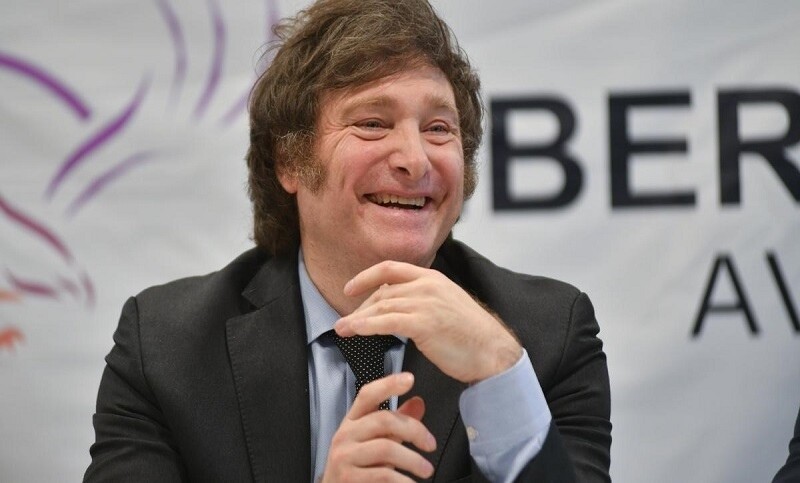
A poll conducted between December 1st and 3rd among 1,772 people shows a society split in half, but with a core of presidential support that has remained virtually unchanged since December 2023. The report shows that the president's overall image is 49% positive and 50% negative, with a slight improvement from November. Behind them are less favorable figures for Cristina Fernández de Kirchner (37% positive, 62% negative) and Sergio Massa (35% and 63%, respectively), who maintain very high levels of rejection. Regarding the year-end balance, 50% of those surveyed believe the country's situation is worse than in 2024, while 41% believe it has improved, a contrast that reflects the tension between macroeconomic recovery and the social impact of austerity measures. Looking ahead to 2026, the survey shows a divided scenario: 45% believe Argentina will be better in a year, while 46% predict further deterioration. The research firm also measured the respondents' political self-perception: four in ten identify with the government, a proportion almost identical to those who consider themselves opponents, while 17% remain distant from both poles. According to Opina Argentina, the ruling coalition ends 2025 with 'opinion variables aligned' after the October electoral victory, which reinforced the climate of support among its voters and ordered the libertarian internal dynamics. Buenos Aires, December 6, 2025 – Total News Agency-TNA – The political year ends with a data point that consolidates the climate of support the government sought to maintain after the October elections: Javier Milei maintains a 49% positive image, according to a poll by Opina Argentina, and reaches the midpoint of his term better positioned than Mauricio Macri and Alberto Fernández at the same point in their presidencies. His image has moved within a stable range—between 55% and 49%—even during the most conflict-ridden months of the economic process. The gender contrast remains pronounced: while 57% of men view the president positively, among women that figure drops to 41%, with a majority maintaining critical perceptions of his management. Unlike his predecessors, Milei has not suffered sharp declines. In both cases, the 'very negative' rejection is still greater than the 'very positive' adherence, but the distribution of support reflects that the ruling coalition retained its electoral strength after two years of government and, after the recent elections, managed to expand its backing among undecided voters. In the economic cabinet, Luis Caputo continues to be a factor of internal stability, with a 43% positive image, an improvement from November. The minister retains a core of support that accompanies the fiscal course and the financial ordering strategy, although he faces rejection levels that exceed 50%. On the other side of the board, Axel Kicillof emerges as the best-valued opposition leader in the country, with 44% positive and 55% negative image. The Buenos Aires governor was the only of the Peronist references who managed to improve his numbers: he grew three points in the positive valuation and reduced his negative image in the same proportion. In parallel, Kicillof consolidates his role as the main opposition figure in a still fragmented Peronism.